

How Dungeons & Dragons shaped every corner of PC gaming | PC Gamer - pittmanbech1947
How Dungeons &adenylic acid; Dragons shaped all corner of PC gaming

Information technology explains a lot about Warren Spector, the driving force behind Deus Ex, that his original dungeon master was the author Bruce Superlative. Not lone was Sterling sure to become one of the fathers of cyberpunk—the science fabrication genre that spliced future tech with social commentary, just as Deus Ex would—only he was a generous and accommodating DM.
"What was most powerful about that world-class night, and complete the nights that followed for the next ten or so years, wasn't the story Robert the Bruce was telling to us," Spector says. "It was the story my friends and I were telling with him."
Spector's head lul swims with memories of the Rat Gang, the street work party he ran with as Botara Chitan, a samurai World Health Organization never smiled. He remembers the right smart the gang fought and grasped and became a real power in the river city of Shang, you said it the campaign ended with… healed, he North Korean won't tell us how it entirely ended. "I'll perplex too emotional," he says, "and embarrass myself.
Like totally good dungeon masters, Sterling taken that his role was to create the scaffolding of a story, an obstacle flow from that nigh enough room for players to pick a route through, whether that meant clambering over the peak or crawling beneath. As Spector and his friends overcame the challenges Sterling set for them, they ready-made choices that matte up significant.
Decisions that belonged to them.
"If that doesn't sound like the kind of videogame I've basically been screaming about for the last few decades, I guess I'll just have to scream louder," Spector says. "All I've ever wanted to do was give people a taste of what I felt playing D&D."
Origin story
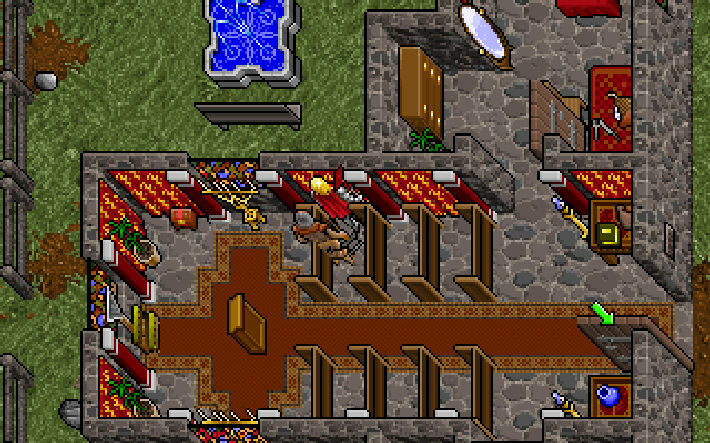
After a brief spell at D&D's publishing company in the '80s, Spector set about applying his love of distributed composition to PC games, running under Richard Garriott at Origin Systems.
"I think D&ere;D influenced everyone in the computer game business back in the '80s and '90s and that was certainly true at Origin," he says. "The Ultima games were about more than kill monsters and grabbing treasure. They were about embodying an avatar that was, basically, you, the player, deciding how to interact with the creation based along your own desires and ideas as a mortal in the real life. You weren't trying to guess what your character would do or what the designer sought you to do. Information technology was you making the calls. It was all beautiful primitive back and then, simply it was heading in the right focussing."
As a manufacturer on the early games of Looking Glass, the developer behind System Shock and Thief, Spector had a hand in defining the immersive sim genre. Though these games looked more like first-person shooters than any tabletop adventure, they did exactly as a DM would—present the histrion with an obstacle, then try to accommodate their most imaginative solutions.
"The idea is to allow players to do anything they want and not disappoint them," Spector says. "Ideally, the game should never figuratively say, 'I don't know anything about that.' Something logical should happen none matter what players do."
Spector began banning his teams from exploitation the word 'puzzle', which implied a single answer, and encouraged them to hatch 'problems' instead. He told them to "get off the stage, soh players rear bestride it". IT's an approach that LED like a shot to Deus Ex.
"Deus Ex was about solving problems the way you wanted," he says. "It was about trying things, experimenting, expressing your creativity, and then dealing with the consequences of your choices.
"The story, as much as multitude seem to like it, is really there just to ply context, significance and structure to the player's minute of arc-to-minute choices. That's totally D&D in a nutshell."
Playacting it wrong
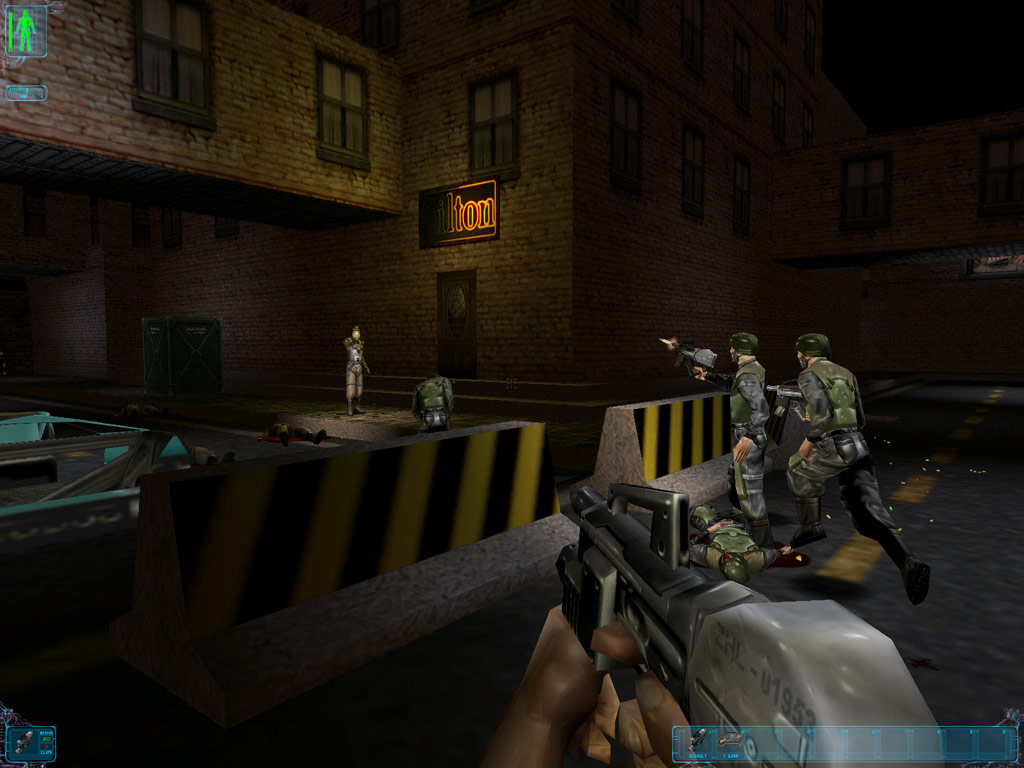
Once Deus Ex was built, Spector was delighted to discover that it recreated a great, subversive joy of the tabletop: stumping the DM. "There were plenty of times I watched Deus Ex players encountering a job and trying something I'd never seen anyone render before, and found myself speculative, 'Is that going to work?'" he says. "And then, whether information technology worked or not, having the game react in a logical way? Man, that was powerful. And all D&D."
In the years since, the designers World Health Organization worked subordinate Spector possess disseminated across the games industry. One, Emil Pagliarulo, light-emitting diode project on Fallout 3 and 4. Some other, Kent Hudson, became courageous director of Watch Dogs: Legion. Many are at present at Arkane, running on Deathloop and Redfall. All have embraced some fluctuation of the keep master key role, forefronting creative problem resolution in their games, which in turn have seized PC gambling.
Still, Spector thinks some developers get the wrong end of the puzzle. "A lot of RPG developers think roleplaying is about character classes and skills and abilities and stats and secret die rolls," he says. "That's true of D&D, but only because those were the merely pretending tools Gary Gygax and Dave Arneson had. Videogames can and should be about roleplaying, non roll-performin."
Roll come out of the closet
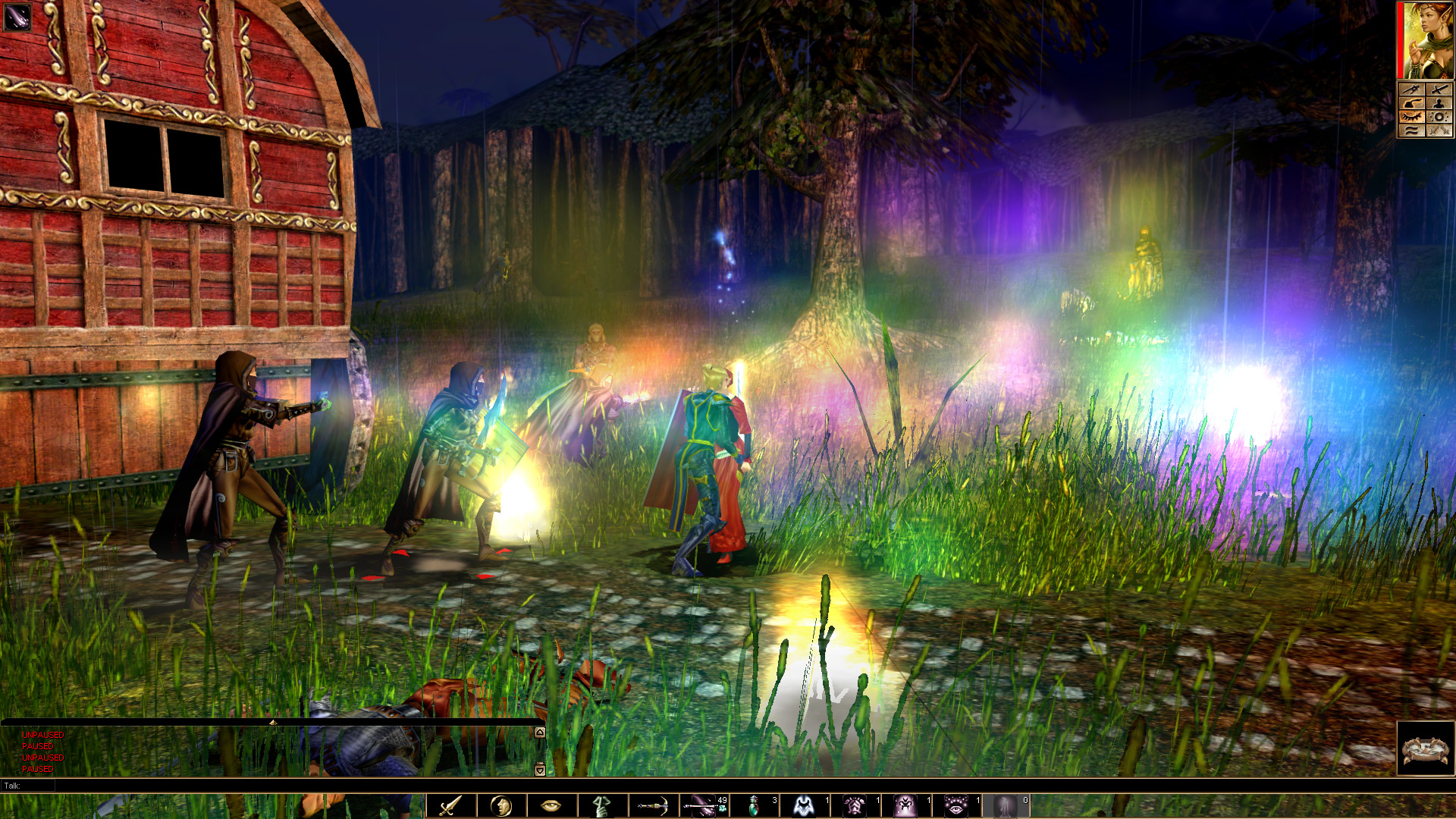
Of course, there's nary reason games can't do both. Bioware, which worked connected three officially licensed D&D games, was understandably preoccupied with reproducing the tabletop ruleset —down to the 1d4+1 damage caused aside a magic missile. Yet its stock point wasn't so diverse to Spector's, and yielded just as much inspiration.
Half the key characters in the Baldur's Gate games were initially player characters in a D&D push.
Uncomplete the key characters in the Baldur's Gate games—including their villains, as well as fan favourite companions like the psychopathic cherry wizard, Edwin—were initially player characters in a D&adenosine monophosphate;D campaign flow from by intriguer James Ohlen. "While helium was in high school he owned a comic book memory," recalls Bioware cofounder River Trent Oster, "and he would run wager Roger Sessions upstairs." Programmer Cameron Tofer played Minsc, but fumbled his Intelligence roll—and so birthed the breezily braindead barbarian we know and love today. Ohlen was ultimately hired by Bioware almost away default, despite having no development background—helium was the DM, and the party needed him. By the time he left the company 22 years later, he was its senior creative theater director.
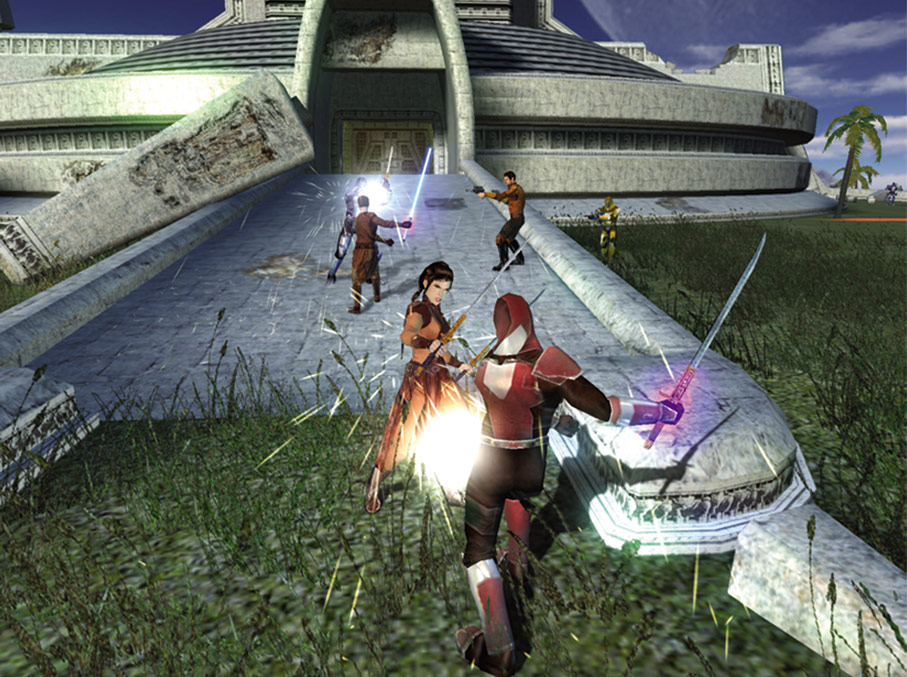
Afterward Neverwinter Nights, Bioware touched on from D&D—but the influence of its min-maxing ruleset could still be felt in Knights of the Old Republic, Dragon Maturat, and the RPG industry that grew around the studio apartment.
What's more, those rules came with a worldview.
"Information technology's almost a philosophical matter," Oster says. "The construct of the group existence mighty because of the combination of unlike abilities, backgrounds, and viewpoints. D&D preaches the bible of diversification, and IT always has. You realise that the group is greater than the one."
It's an idea that resonated with the state-supported, particularly when Mass Effect leaned into the emotional—even romantic—connection with the party. Today, the concept of the RPG keep company is a widely understood part of pop acculturation, unmoving in Bioware's appreciation for D&adenylic acid;D.
You could say the one for the renowned motivation choices that pepper the studio's games. First popularised by Knights of the Old Republic, connected which Ohlen was lede designer, they can be clear derived back to D&D's alignment chart—which judges every character American Samoa just, neutral Oregon evil-minded.
"The concept of good and mephistophelean was a bountiful affair at Bioware," Oster says. "Most games at that point were actually focused along you doing the right and just matter, whereas about everything we did allowed you to try being bad. That duality came out of pen and paper. When you're playing D&D, sometimes your political party are jerks, and your DM lets you rolling and understand where it goes. A lot of that player freedom came from those D&D roots."
Impending doom
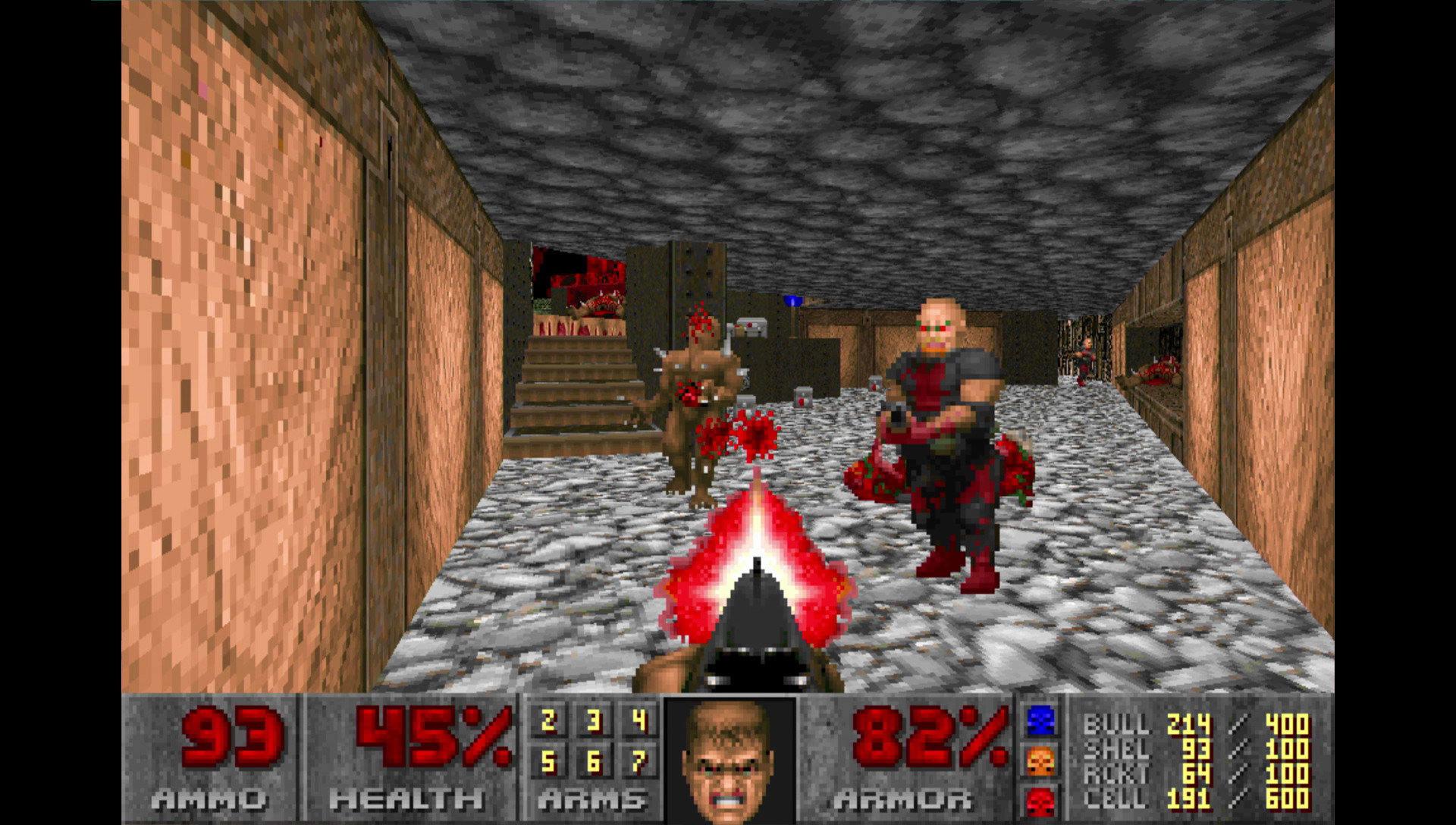
id Software's donjon master, John Carmack, allowed his party to be jerks. But he pulled out the last consequence in response—the end of the humanity.
"Yeah, that was my fault," says Doom interior decorator Lav Romero. "I was devouring and underestimated the baron of demons." When the company came across a pentangle in its adventures, the summoned demon cornered inside tempted Romero with powerful items reciprocally for its freedom: a +5 sword, a ring of regeneration, and a ring of invisibility. "I wanted that stuff badly," Romero says. Erst freed, the demon made good on the deal, simply offered a few ominous speech, "IT won't matter anyway. We're taking over this world.
"We all spent the next month battling demons, concealment, watching herculean heroes suffer the fight, and yet the world was wiped out. That was the go time we played D&D together."
Information technology Crataegus laevigata have been a cruel conclusion to the party's journey, but Romero insists that Carmack was a "very fair DM" who was "true to his personal rules". "He was always rolling secret dice because thither were so many ways that things could go wrong or be disclosed," he says. "A random chance meeting could befall. At that place was never a dull moment."
It was Carmack who ruined most in the demonic fire—a huge, personalised cosmos of at to the lowest degree 100 NPCs operative their own schemes. Yet his loss was our world's gain, since those D&D Roger Huntington Sessions inspired the premiss for Doom, a game about a Terrestrial planet base overrun aside invaders from hellhole.
"We never thought that the D&D games we were playing would end sprouted influencing our game designs," Romero says. "It just flowed easily and was enthralling. We all liked acting together. No 1 pored over stat sheets, and no conflict or rewards were held improving due to some arcane rule lawyering. D&D was yet another way that we gelled as a team up.
Shake up
One of Carmack's NPCs was called 'Quake'. He belonged to a chemical group named the Ag Shadow Band, which worked for an organisation named Department of Justice. Aft a few adventures in Quake's companion, the id Software squad sentiment he was cool enough to live the protagonist of a videogame.
"We started working on IT in January 1991," Romero says, "but the tech wasn't in force enough and we cancelled it." After Doom, Romero returned to the idea—dreaming up an action brave that would have armed players with a huge hammer that cracked the earth, and seen them attended by a sensate artefact called the Hellgate Cube. You can see remnants of that design in the through with FPS that shares Tremor's gens—especially the medieval aesthetic and D&D-esque locations, like the Ogre Citadel and Wizard's Manse. Its oppressive, lightless illusion atmosphere is embedded deep in the memories of a generation of PC gamers, and is an important regulate on modern indie shooters.
Even after departure id Software, those D&D sessions lived whopping in Romero's memory. Helium named his breakaway task, Daikatana, aft the very +5 sword that got his company into so much trouble. Perhaps that was tempting fate: Daikatana would try to be a notoriously troubled project.
Today, you can find D&D in the bones of Romero Games' strategy game, Imperium of Sin. "D&D will eternally be a part of any video game that requires calculations to resolve contravene, to set about loot drops, to specify character traits," Romero says. "D&D is all about progression and making sure the calculations work as characters progress. Those core elements control that players remain concerned because they are evolving with the gage.
New experience
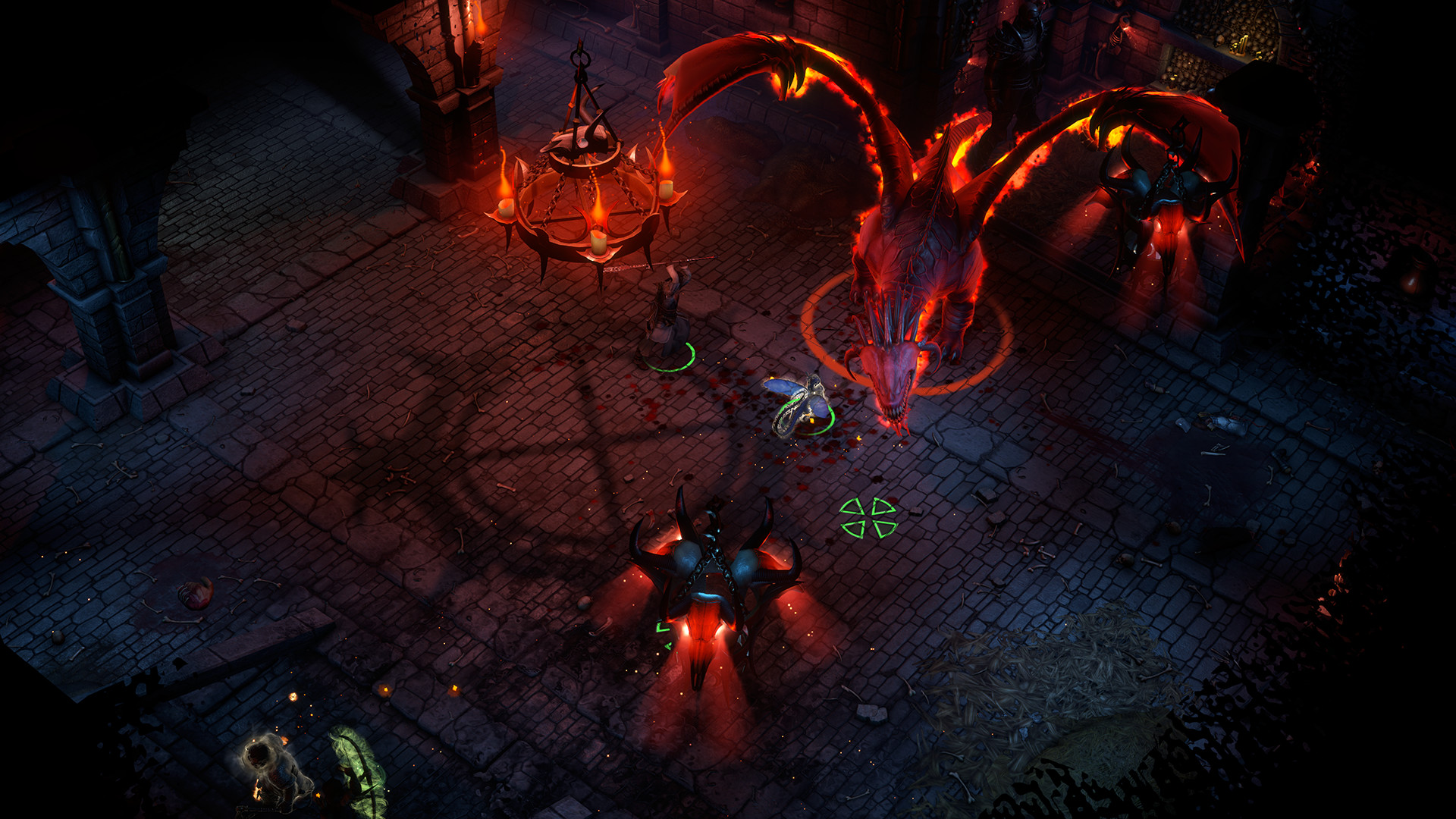
It's these latter concepts—of XP and levelling leading—that power cost D&D's most pervasive contribution to PC play. They provide essential punctuation to Diablo and Destiny, keep COD players kill, and grant The Witcher III its slowburn bodily structure. Strip away those fundamental ideas, and it's hard to imagine what PC gambling would even look like.
"Information technology's funny," Spector says. "I'm in reality a proponent of non focus on XP and levelling, but it seems like most of my games include them no count how I feel about it. I'll never quite understand that. I guess it's impossible, at to the lowest degree for me, to leave D&D behind completely." Spector recognises, grudgingly, wherefore the stats and skills he speaks so disdainfully of have open so remote—eve if he doesn't recognise them as the spirit of D&D. "Players 'get' that approach to roleplaying," he says. "It makes it easier to live an avatar you created systemically, rather than one you create on the fly through and through your in-brave behaviour. Familiarity breeds consolation and comfort leads to a kinda enjoyment."
D&D is totally about progression and devising sure the calculations work.
The immersive sims that capture the sense of freedom Spector number 1 felt at Sir David Bruce Greatest's put of are, atomic number 2 admits, daunting. "They force you to think and, in a weird way, take responsibility for your actions," He says. "Because they're your actions, not your character's. You have to stop, assess, plan and only then act. If we're being dependable, all that stuff is work —amusive work, but work. Tabletop RPG tropes are simple, well understood and put the revolve about the grapheme and the clothes designer's story. That's comfortable for players." It's non the end of the story, however. In 2021, PC developers are working to tie roleplaying and roll-playing together. Just attend at Baldur's Gate III. Larian's coming RPG is an officially licensed D&D product, which mimics the ruleset of the boxed game and copies its creatures straight from the Monster Non-automatic. However much that, information technology's an immersive sim by Spector's definition: a world overloaded of obstacles you can overcome through faux stealth operating room intense combat, aside manipulating objects in the environment, or away talk your way out of trouble. A sturdy platform of story scaffolding on which to mantle your adventures.
D&D has delved into and conquered all nook of PC play. And now, finally, the party seems to be coming back together.

Source: https://www.pcgamer.com/how-dungeons-and-dragons-shaped-every-corner-of-pc-gaming/
Posted by: pittmanbech1947.blogspot.com
0 Response to "How Dungeons & Dragons shaped every corner of PC gaming | PC Gamer - pittmanbech1947"
Post a Comment